Showing posts with label Education. Show all posts
Showing posts with label Education. Show all posts
Thursday, December 8, 2016
Fixing Our Gaze on The Immaculate Conception
A most blessed Feast of the Immaculate Conception to you!
In this clip from The Song of Bernadette we see Bernadette fixing her gaze on the beautiful lady who has been appearing to her at Lourdes. In answer to Bernadette's request to learn her identity, the lady responds, "I am the Immaculate Conception."
Watching Bernadette in the opening scene as she knelt there on the ground, I was impressed by the purity of her expression as she looked upon the most pure Virgin. How rare it is to see that kind of innocence today! And I thought about the Catholic concept of custody of the eyes and what a daily battle we must fight to practice it.
It's frightening, but much of what we should guard against today, we may not even be aware that we see.
Let me explain.
I just finished reading a transcript of a Solari Report podcast on entrainment technology, a form of mind control. In it, Catherine Austin Fitts interviews Adam Trombly, a scientist/physicist, about how this technology is used and what you can do to minimize its influence on your life.
Basically, the entrainment relaxes/pleasures you and puts you in a state of openness to suggestibility. The suggestibility part is where they implant the subliminal message they want you to act upon. Entrainment is used surreptitiously in all kinds of media--dvd's, cd's, radio, movies in the theaters, etc., but it seems television paved the way for the others starting way back in the 1950s.
Maybe I've finally discovered why Catholics accepted the New Mass in 1969. They had been lulled to sleep by gathering in front of the TV at home instead of kneeling in front of the Immaculate Conception and the Crucifix.
John Senior was so right when he admonished Catholics to "smash the television," in his classic book, The Restoration of Christian Culture.
Of course now the television has morphed into all kinds of different screens that we must guard ourselves and our children against. We haven't done such a good job. Just look at how we fell for the notion that public school children needed computers in the classroom to be able to keep up with technology and compete in the modern world.
After reading about entrainment techniques, I firmly believe that the so-called "snowflakes" are a product of it. Previously I had thought it odd that Hillary Clinton had called on pop singers to boost her campaign. But now I understand that their music and videos are powerful vehicles for entraining listeners. The raw emotion from the melting snowflakes finally makes sense. At first I thought it was all the coddling they received in school and a lack of critical thinking skills. And, of course, a lack of the True Faith.
As I thought more about the idea of how we, like Bernadette, should "fix our gaze" on the Immaculate Conception, I became aware of the double meaning, as "fix" also means to repair. We do need to constantly fix our gaze by avoiding as much as possible the things the world wants us to see. And we must pray the Rosary, which Our Lady gave us as the most efficacious weapon for our battles against the world, the flesh, and the devil.
The Rosary, with its beautiful mysteries, gives us lovely pictures to contemplate and incites the imagination to holy thoughts, which makes us more human, more alive, more able to create. All this is in direct opposition to the sounds and images that the world wants us to consume. Look around, and you will see the results--zombie-like people who are consumers, not creators.
Interestingly, entrainment technology takes advantage of God's design for our brains. As Mr. Trombly explained it, "Entrainment technology basically is the technology that exploits a neurological function called frequency following response. And, frequency following response was discovered in the earlier part of the 20th century and in terms of this type of entrainment was a matter of when the brain hears a repetitive pattern.
"It can be a repetitive pattern of words, it can be a repetitive cadence of rhythm, or in modern times it can be a repetitive acoustic sound coming across the loud speaker. It can be in a certain wave form, a certain frequency, the brain will follow that sound. The brain will follow that sound whether it’s monaural or binaural or surround sound; the brain will fall into rhythm with that sound."
My conclusion from that explanation?
God hard-wired our brains for the recitation of the Rosary with its repetitive pattern of words and repetitive cadence or rhythm! Without fixing our gaze on the Immaculate Conception and praying the Rosary, we leave ourselves open to conquest by the Powers of Darkness, the enemies of Christ.
Three Steps to Follow
Fix your gaze
Pray the Rosary and
Entrain your brain to follow that sound to Heaven.


Tuesday, December 6, 2016
St. Nicholas and Using Money in a Catholic Way

I was thinking early this morning as I set up our St. Nicholas display that he really gave us a good example of investing money. If you are unfamiliar with the story, he secretly gave a bag of gold from his inheritance as dowry for each of three poor maiden sisters so that they could marry well.
I use the term investing rather than giving because if you think about it, there is nothing more important to a healthy civilization than establishing good Catholic communities. And that begins with Catholic families. Helping these girls marry was a wonderful way of investing that paid interest by furthering Christ's kingdom, which as a bishop he understood perfectly.
Notice he didn't toss them gold so that they could buy a house of their own or go to college or travel the world. He gave it expressly for marriage.
He imagined the kind of world in which he wanted to live, one where Christ is King, and he put his money where it would work toward that vision. And though this example involved charity, I want to engage in the same kind of thought process for all our family's monetary transactions.
However, going from the thought process to the reality is where it becomes exceedingly difficult, dare I say impossible? As you have probably discovered, there is this whole corrupt underworld operating out of sight that does not care about you, your children, or your grandchildren and actually hates Jesus Christ. It just wants your money. It doesn't care whether your neighborhood is safe or whether you have access to food that is not poison. It's like we live in a giant charade. I truly feel like I go out into the world with sword drawn just to go to the grocery store and the drug store. I mean, they look like nice places, but they both really, really want to give me a flu shot! At least that is what I infer from all the signs they post, trying to entice me to get one.
For our wrestling is not against flesh and blood; but against principalities and power, against the rulers of the world of this darkness, against the spirits of wickedness in the high places.
Clearly, Prince of Lies, Inc., is the real owner of many profitable companies.
So it is difficult, but it really does matter where you bank and what companies you support by buying their products. We can't give up.
I have subscribed to two different investment advice/education sites over the years, hoping to find help in this matter, but in both cases I unsubscribed after determining their advice didn't fit my vision. In fact, it clashed with it. I don't want to invest in the military-industrial complex even if it is the best return on my money. It's evil.
Recently I subscribed to another site after watching several video interviews with its author, Catherine Austin Fitts. Here's one of the first one I watched:
Her site, Solari.com, is such a wealth of helpful information that I am still mining its rich archive two months later. I subscribed on the monthly plan to see whether I would like it. It's $30 a month. I will most likely buy an annual membership in January. No, I don't get any money from mentioning the site, no benefits of any kind.
I am particularly excited about her posts on "Reviving a Local Economy". I think it would be a fantastic tool for young Catholic families to use to start creating the kind of place they want to live and raise families. She gives advice on how to extricate yourself from the corruption as much as possible and how to start investment groups to help one another succeed. Of course, it is not perfect. It is just the most helpful site I have found so far. It's so helpful that I could keep writing about it for a long time, but alas, the day wanes, and soon St. Nicholas Day will be over.
So that's all for now.
Thursday, November 24, 2016
Play Me

I stood there mesmerized while the little girl plunked away at the tired keys. She obviously had never had a piano lesson, but that did not dampen her enjoyment at all. It probably heightened it.
I was struck with the idea--so simple--that We Can Do Little Things That Make a Big Difference.
There is the possibility that the opportunity to play this piano will lead to an interest in studying music. This would undeniably be a great return on the investment of making the piano available to festival goers. But even if no one was inspired to learn music, what a fabulous expression of goodwill! I believe that such acts create good returns, even if they appear to be invisible.
Recently I noticed an old and scarred baby grand piano on display in my local community center. It was roped off, but there was a small placard on it that explained that the instrument had been used to teach piano lessons to local children for 30 years. I marveled at the remarkable impact this piano most likely has had on our town, probably with immeasurable ripple effects of goodness that have echoed throughout the country. I am grateful to whomever had the insight to put it on display. So often we are encouraged to publicly admire the big industrialist. His impact can be measured in dollars, so he easily gains recognition.
I struggle to remember these lessons. I have gotten caught up in all the national election hoopla. Yes, the president of the United States is important. But we cannot discount the importance of the little local things that we can do. Locally, we can have a far bigger impact than nationally.
I have been reminded since the election that even a smile matters. With all the news about the animosity of different groups, I realized that I was beginning to expect people to be unfriendly to me. I have been enormously relieved to have my expectations proved completely unfounded. Representatives of the different groups have gone out of their way to greet me with warm smiles and welcoming eyes--to politely and cheerfully say, "Excuse me," as they pass by me in the grocery store.
I happily return the greeting and remind myself to take a break from the news, even the alternative news, and to make decisions on my own experience.
Wednesday, April 27, 2016
In the Spirit of Fraternal Encouragement: A Music Detox
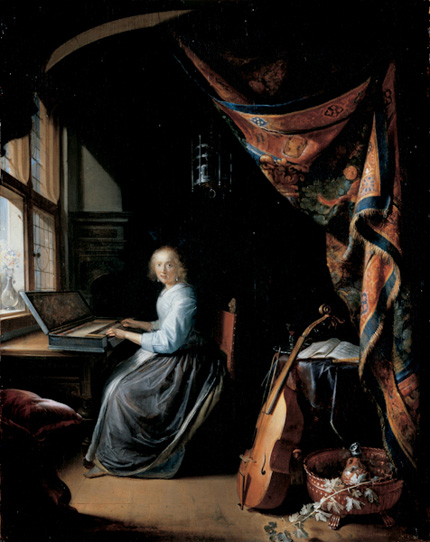
John Cuddeback, a philosophy professor at Christendom College, has invited his Bacon From Acorns blog readers to join him in listening to only a select few "classical" music pieces for two weeks. I think it is a grand idea! It offers a reset of our emotions and an opportunity to get to know several beautiful pieces intimately. Read his post linked above to get his list of recommended pieces, overflowing with musical antioxidants.
Mr. Cuddeback does not include any Gregorian chant because of its intended use as liturgical prayer, but here I must lovingly disagree. Are we not to pray without ceasing? And is not the home our domestic church? I think it would add greatly to the efficaciousness of the "fast" to listen to one piece of chant every day for the two weeks, especially if you did it first thing in the morning to help set the tone for the rest of your day. Aside from the graces to be gained, it would also give our parasympathetic nervous systems, so overloaded with the stimuli of modern culture, a rest, as Gregorian chant appeals directly to the intellect, not the passions.
Need more inspiration? Here are two things I read today that I found immensely edifying.
Twelve Latin Chants Every Catholic Should Know: This is great for narrowing down the choices, and it gives a little background with each chant. Well, actually I lied. It didn't help me narrow the choices. With each description I was sure that I would finally decide on THAT piece, only to read the next description and decide that it was THE ONE. Maybe I shall start at the top of the list and listen to each piece for two weeks until I have absorbed each one into my being.
Feeding Our Children Liturgical Garbage: Jeff Ostrowski, who holds a Bachelor's degree in Music Theory, explains in a short Views from the Choir Loft blog post why we should listen to the best music and provide it for our children. He shares some stellar quotes, too.
Sunday, April 10, 2016
A Housewife's Education: Without the Encumbrance of Degrees

An inspiring excerpt from Solange Hertz's Searcher of Majesty:
Ancient monks called Mary "the philosophy of Christians," and spoke of "philosophari in Maria." Obviously philosophy belongs to the housewife as tent-making belongs to St. Paul. It's comprehensive. It's cheap. It requires absolutely no special equipment but wonder. One has to study philosophy and invest in expensive books to be a philosophy professor, but not to be a philosopher. A philosopher is just anyone who's willing to hit head on, with his head, the mystery in what everybody else takes for granted.
Really only housewives have time to grapple in their native habitat with such things as space, time, being, motion, birth, or growth, in order to classify properly why dishes break, or why yesterday can't be lived again, what's up, or just who is my five-year-old. Whatever the housewife chooses to study at home, she is in the enviable position of being able to go after knowledge itself, without the encumbrance of degrees. This isn't an inconsiderable advantage, being set free to proceed at her own rate, without grades or classroom, toward what she, and not somebody else, needs to know.Here I would like to insert that later in the book, Mrs. Hertz talks about women and the cyclical nature of their hormones, which explains their need for stable lives at home, and how our culture demands instead that they run hither and yon. (I wonder what Mrs. Hertz would have to say about American women now fighting in wars!) She compares this to how dairy cows are treated, which may seem funny, but it is so true. Dairy cows lead quiet lives of regularity at home, because if they can't their milk dries up. This is true of women too, whether it's producing milk for the baby or the milk of human kindness or sharing "the milk" of their wisdom. I have come in contact with so many young women whose health has collapsed because of how the unnatural stress of college affects their hormones.
Mrs. Hertz continues:
A mother's knowledge can't be just a series of isolated facts to be tabulated later, like a research assistant's. It must be coordinated and unified even beyond the power of philosophy to accomplish. It must be super naturalized. It must become wisdom. Wisdom can take unto herself any amount of undigested facts and transfigure them, but in this world this happens only through suffering, through pondering them painfully and deeply in the heart.
Few mothers can take it. Their college educations rarely become a part of them to that extent. Ignorant women are the curse of the home, as great female educators like St. Madeline Sophie Barat and Mother Janet Erskine saw only too clearly. Educated women, on the other hand, can hardly be made to stay home at all! They can't waste themselves on a handful of children, and a world greedy for their skills agrees only to readily. Female education today is little more than a way out of the house.
The supernatural education of the young, nevertheless, depends precisely on teachers who are able to "stay home" and transmit to them the painful fruits of their wisdom, the "true knowledge of the things that are." Wisdom knows, says Scripture, "the disposition of the whole world, and the virtues of the elements, the beginning, and ending, and midst of our times, and alterations of their courses, and the changes of seasons, and the revolutions of the year, and the suppositions of the stars, and the natures of living creatures, and rage of wild beasts, the force of the winds, and reasonings of man, the diversities of plants, and the virtues of roots," for wisdom knows everything, keeps track of everything and has everything, like the good housewife she is (Wis. 7:17-20).
Monday, March 7, 2016
These are the Moments
 |
| Can you see how much Emma loves her daddy? |
My dear husband was finally able to make it to one of Emma's piano recitals at her community college recently. He was in Houston at a shop supervising the work being done on some kind of huge part, was it a valve? for a unit in the refinery where he works. So he left there, came home and picked me up, and we dashed to the school--gobbling our lunch while we drove--very uncivilized, I admit. We managed to get to the school in the middle of the first performance, and Emma was up next. Of course, she was texting me, "Where are you?"
We waited in the lobby until we could scoot in between performances and grab seats. It was so exciting for me for Herb to get to come--and for Emma, too. Afterward I got this "prison lineup" shot of them outside the recital hall. They're so cute together and so much alike!
Saturday, October 24, 2015
Reading for Conversion II
I've got a carrot cake in the oven, so I thought I would try to blast out a post, lest I fall off the blogging wagon once more.
I think my dad may be making progress towards conversion. Thursday at breakfast he told me that he had run into the word "sentient" and that it had been a long time since he had seen it. I thought I knew the definition but wasn't sure, so I googled it right then. I had it wrong. This is what the dictionary said:
I asked him where he read it, and he told me that it was used in the physics book he is reading, The Road to Reality: A Complete Guide to the Laws of the Universe. The book qualifies as a tome:
Boy, did I digress or what? Back to "sentient." I read aloud the paragraph with "sentient" in it. I skimmed through some other parts too, trying to figure out if the book was anti-religion. I hit upon this one paragraph that included a sentence stating that science without morals was a bad thing. SCORE! I was so happy! I read that sentence aloud, and we discussed it briefly in the light of the book we recently finished, A Song for Nagasaki. Dad agreed with me. So now I know that Dad and I have something to build upon.
I mentioned that I missed having a read-aloud book going, and Mom and Dad both agreed that they missed it too. I asked Dad what he wanted me to read next. He asked for something about Alaska. We talked about Jack London and The Call of the Wild and also London's book The Sea Wolf, which we had discussed when I read it in the sixth grade. Strange to think about us still discussing books 43 years later. I had been planning on reading With God in Russia to them to continue the Catholic in WWII theme but didn't know if choosing only Catholic books would wear thin with Dad. That's why I asked him what he would like to read next. So I guess we'll go to Alaska and maybe then slide over to Russia. I want to read the companion book to With God in Russia also. It's called He Leadeth Me.
****
The carrot cake's done, and I need to make the frosting.
A most blessed Feast of Christ the King to you all!
I think my dad may be making progress towards conversion. Thursday at breakfast he told me that he had run into the word "sentient" and that it had been a long time since he had seen it. I thought I knew the definition but wasn't sure, so I googled it right then. I had it wrong. This is what the dictionary said:
able to see or feel things through the sensesMan is a sentient being.There was no sign of any sentient life or activity.
I asked him where he read it, and he told me that it was used in the physics book he is reading, The Road to Reality: A Complete Guide to the Laws of the Universe. The book qualifies as a tome:
The Amazon description pegs its weight at 4 lbs. And it is definitely scholarly. My experience of it with Dad has indeed been "chiefly humorous." When he was doing the prep for a colonoscopy last month--the one where you drink the gallon of nasty stuff, and it gives you death by diarrhea--to save energy he parked himself on the toilet to await the process completion. As he finished each glass of the Liquid Plumber, he would call me for a refill. The first time I paused before entering and asked him to please cover himself with something. He has no discernible sense of modesty. He said, "Ok. I'm ready." I walked in to find him butt naked except for the strategically place Road to Reality. Then yesterday he had a doctor's appointment. He can't dress himself because of his arthritis, although he does manage to put on his underwear. Other than his boxers, his daily attire is his robe. So when he has to wear real clothes, I dress him. I entered his room to get him ready and found him waiting for me: sitting on the foot of the bed in his boxers, legs crossed, reading Road to Reality. He looked so cute!Definition of tome in English:
noun
chiefly humorous
Boy, did I digress or what? Back to "sentient." I read aloud the paragraph with "sentient" in it. I skimmed through some other parts too, trying to figure out if the book was anti-religion. I hit upon this one paragraph that included a sentence stating that science without morals was a bad thing. SCORE! I was so happy! I read that sentence aloud, and we discussed it briefly in the light of the book we recently finished, A Song for Nagasaki. Dad agreed with me. So now I know that Dad and I have something to build upon.
I mentioned that I missed having a read-aloud book going, and Mom and Dad both agreed that they missed it too. I asked Dad what he wanted me to read next. He asked for something about Alaska. We talked about Jack London and The Call of the Wild and also London's book The Sea Wolf, which we had discussed when I read it in the sixth grade. Strange to think about us still discussing books 43 years later. I had been planning on reading With God in Russia to them to continue the Catholic in WWII theme but didn't know if choosing only Catholic books would wear thin with Dad. That's why I asked him what he would like to read next. So I guess we'll go to Alaska and maybe then slide over to Russia. I want to read the companion book to With God in Russia also. It's called He Leadeth Me.
****
The carrot cake's done, and I need to make the frosting.
A most blessed Feast of Christ the King to you all!
Wednesday, October 21, 2015
Women Waiting for Marriage: It's Hard to Know What to Do
So I heard recently about an eligible bachelor with a high income and a stable job history, a young man who is intelligent and amiable and wants to marry but with this one twist: he seeks a bride who earns a high income as well. He is not Catholic but still I was surprised. Is this a thing? Am I that out of touch with the modern world?
I checked in with my husband.
"Honey, did you ever consider how much money your future wife would make as part of the criteria for finding the right one?"
His face contorted.
"What?" he asked, as if I had just asked him if he had ever considered marrying a Martian.
"No," he answered definitively.
I explained why I was asking, and he too was surprised. "I never heard of that," he replied, shaking his head in disbelief. He didn't say it, but I could tell he was thinking, "he needs to man up".
The next day I heard about a son-in-law who left his wife every time they had a new baby or made an expensive purchase like a car. He has a fear of responsibility. Maybe that's what is at the heart of the problem with the other guy.
I didn't need another reason to appreciate my husband, but these stories did cause exactly that reaction.
I'm not so sheltered that I am unaware that the majority of married households are made up of two wage earners. It's just the idea of a man who already earns an income that is more than enough to support a wife and family comfortably, screening potential spouses based on income-producing ability, never occurred to me. What a complete inversion of the traditional household economy!
The traditional Catholic world is steeped in its own controversies regarding women and careers. I know plenty of trads who vehemently disagree with the idea of a woman attending college. They are mostly single young men, insisting that women should stay home and learn domestic skills until marriage. I also know others, mostly worried parents, who insist that women need to prepare to support themselves for life, to not expect that they will ever find anyone to marry. I know wonderful, pious young ladies in both situations. I spoke with a lovely young Catholic woman recently who told me that her traditional Catholic parents had witnessed so much divorce within their own Catholic families, that they advised their girls, growing up in the 1980s-90s, to become self-sufficient and not to become attached to the idea of marrying.
Me? I think college today is grossly overrated as a means to a career, and I dislike it in general because it is so flagrantly anti-Catholic and ridiculously expensive. I would prefer women find other ways to support themselves. I know that not every home situation is ideal for a woman to remain in until marriage and that it is often the case that she has already learned all that she needs to know about keeping house. I do think that something is lost when a woman becomes financially independent that will make it more of a struggle to let her husband lead the household if and when she is able to marry. I also think that her husband, knowing that she is capable of earning a good salary, could be tempted to take advantage of this when things get tough, instead of, as my husband says, "manning up" and doing what's necessary to support the family. Yes, I know that there are situations where the wife works, and she and her husband have worked everything out where it does not cause a strain on the marriage. I'm just speaking in generalities and with the idea that we're talking about traditional Catholic homes with several/many young children.
Life is full of struggles, isn't it?
What times we live in.
On a lighter note, maybe the answer lies in promoting participation in wife-carrying contests like this one in Houston. Enjoy!
I checked in with my husband.
"Honey, did you ever consider how much money your future wife would make as part of the criteria for finding the right one?"
His face contorted.
"What?" he asked, as if I had just asked him if he had ever considered marrying a Martian.
"No," he answered definitively.
I explained why I was asking, and he too was surprised. "I never heard of that," he replied, shaking his head in disbelief. He didn't say it, but I could tell he was thinking, "he needs to man up".
The next day I heard about a son-in-law who left his wife every time they had a new baby or made an expensive purchase like a car. He has a fear of responsibility. Maybe that's what is at the heart of the problem with the other guy.
I didn't need another reason to appreciate my husband, but these stories did cause exactly that reaction.
I'm not so sheltered that I am unaware that the majority of married households are made up of two wage earners. It's just the idea of a man who already earns an income that is more than enough to support a wife and family comfortably, screening potential spouses based on income-producing ability, never occurred to me. What a complete inversion of the traditional household economy!
The traditional Catholic world is steeped in its own controversies regarding women and careers. I know plenty of trads who vehemently disagree with the idea of a woman attending college. They are mostly single young men, insisting that women should stay home and learn domestic skills until marriage. I also know others, mostly worried parents, who insist that women need to prepare to support themselves for life, to not expect that they will ever find anyone to marry. I know wonderful, pious young ladies in both situations. I spoke with a lovely young Catholic woman recently who told me that her traditional Catholic parents had witnessed so much divorce within their own Catholic families, that they advised their girls, growing up in the 1980s-90s, to become self-sufficient and not to become attached to the idea of marrying.
Me? I think college today is grossly overrated as a means to a career, and I dislike it in general because it is so flagrantly anti-Catholic and ridiculously expensive. I would prefer women find other ways to support themselves. I know that not every home situation is ideal for a woman to remain in until marriage and that it is often the case that she has already learned all that she needs to know about keeping house. I do think that something is lost when a woman becomes financially independent that will make it more of a struggle to let her husband lead the household if and when she is able to marry. I also think that her husband, knowing that she is capable of earning a good salary, could be tempted to take advantage of this when things get tough, instead of, as my husband says, "manning up" and doing what's necessary to support the family. Yes, I know that there are situations where the wife works, and she and her husband have worked everything out where it does not cause a strain on the marriage. I'm just speaking in generalities and with the idea that we're talking about traditional Catholic homes with several/many young children.
Life is full of struggles, isn't it?
What times we live in.
On a lighter note, maybe the answer lies in promoting participation in wife-carrying contests like this one in Houston. Enjoy!
Sunday, October 11, 2015
Lessons from a Sewing Class
I spent three most happy days recently taking a beginner sewing class. From a Pentecostal lady. In a sewing shop where all the employees are Pentecostal. And the owner is Pentecostal.
First, it was sweet to be surrounded by ladies who dressed attractively and with feminine style every day! Love, love, love. I wish women knew how much good they could do in this world by thinking first about God's glory and others' edification when they choose how they will dress.
Second, I joined in on edifying conversations about homemaking, marriage, tending the sick, preparing for holidays, etc. And that was all we talked about.
Third, I observed how integrated their lives are: their church, shop, and home activities, their friendships, all Pentecostal. Many of the shop's clientele are Pentecostal as well.
Fourth, I thought how marvelous it would be to own a sewing shop with all Catholic ladies from my parish working there, and going to Mass together, being closed on holy days of obligation, and having classes on how to make decorative items for celebrating the liturgical year! Haha! You knew that was coming!
Of course I shared all this with Emma when I got home, and we both indulged in the delicious fantasy for a few moments, as only commuter Catholics can truly appreciate.
Back to reality, I made a pair of prissy pajama pants for my mama out of a print with butterflies and flowers. I added some giant pink rick-rack to the hem. So adorable. Emma said they were the cutest pajama pants she had ever seen. High praise, indeed.
For me, the thing I needed to learn the most was a little confidence. I actually had basic sewing skills before the class, but had not sewed in 25 years, and had such a horrible record of running into obstacles and not finishing, that I wanted this class as kind of a re-boot. I really, really enjoyed the actual sewing. I felt so relaxed at the end of each class! Well, there was one little stressful thing. I was using one of the shop's new-fangled machines that does not use a foot pedal. My instructor called it "push button" sewing. I had to take my right hand off the fabric to push the button to stop the machine. Me not like that. At all. On the plus side, the machine speed was constant. My foot is not. I am looking forward to getting out my rugged and basic 1980s Viking machine that is not smarter than I am. It can't thread itself or back stitch unless I tell it to.
At the end of the class, I bought a pattern for making this nifty travel iron carrier/ironing pad. The shop had one made up and on display, and I thought it was super adorable. Of course no one except quilters totes travel irons anymore. Well, maybe RVers? Oh, well. I am making it anyway because of the cuteness factor, and it doesn't require zipper or buttonholes skills. Lol!
First, it was sweet to be surrounded by ladies who dressed attractively and with feminine style every day! Love, love, love. I wish women knew how much good they could do in this world by thinking first about God's glory and others' edification when they choose how they will dress.
Second, I joined in on edifying conversations about homemaking, marriage, tending the sick, preparing for holidays, etc. And that was all we talked about.
Third, I observed how integrated their lives are: their church, shop, and home activities, their friendships, all Pentecostal. Many of the shop's clientele are Pentecostal as well.
Fourth, I thought how marvelous it would be to own a sewing shop with all Catholic ladies from my parish working there, and going to Mass together, being closed on holy days of obligation, and having classes on how to make decorative items for celebrating the liturgical year! Haha! You knew that was coming!
Of course I shared all this with Emma when I got home, and we both indulged in the delicious fantasy for a few moments, as only commuter Catholics can truly appreciate.
Back to reality, I made a pair of prissy pajama pants for my mama out of a print with butterflies and flowers. I added some giant pink rick-rack to the hem. So adorable. Emma said they were the cutest pajama pants she had ever seen. High praise, indeed.
For me, the thing I needed to learn the most was a little confidence. I actually had basic sewing skills before the class, but had not sewed in 25 years, and had such a horrible record of running into obstacles and not finishing, that I wanted this class as kind of a re-boot. I really, really enjoyed the actual sewing. I felt so relaxed at the end of each class! Well, there was one little stressful thing. I was using one of the shop's new-fangled machines that does not use a foot pedal. My instructor called it "push button" sewing. I had to take my right hand off the fabric to push the button to stop the machine. Me not like that. At all. On the plus side, the machine speed was constant. My foot is not. I am looking forward to getting out my rugged and basic 1980s Viking machine that is not smarter than I am. It can't thread itself or back stitch unless I tell it to.
At the end of the class, I bought a pattern for making this nifty travel iron carrier/ironing pad. The shop had one made up and on display, and I thought it was super adorable. Of course no one except quilters totes travel irons anymore. Well, maybe RVers? Oh, well. I am making it anyway because of the cuteness factor, and it doesn't require zipper or buttonholes skills. Lol!
Saturday, September 14, 2013
Catholicism in the South Radio Broadcast
Dixie can be a lonesome place for Traditional Mass Catholics. I always assumed that was because the South was never a stronghold of Catholicism to begin with. Catholic Historian Charles Coulombe says that's not so. He will talk about Catholicism in the South tomorrow on Restoration Radio's series Catholic History with Charles Coulombe.
In the interest of full disclosure, I am working part-time for True Restoration as its Social Media Manager, but this is something I would have shared anyway. I am hoping that the radio program will get lots of callers, so that there can be a lively discussion. I want to learn a lot more about this important part of Catholic history. I will be paying particular attention to ideas and attitudes that may help us rebuild the South under the Social Reign of Christ the King.
This paragraph from the show description fills me with anticipation:
What does the antebellum period in the Southern United States tell us about Catholicism, and what happened to it during the War Between the States and in the "reconstruction" years? How is a Catholic to understand the successive chain of events that took the United States from the War of Nothern Aggression of 1861-1865 to the 1960s Civil Rights Movement which produced such figures as Dr. Martin Luther King?
The show starts at 9 pm, EDT/8 CDT. I'll be glued to my chair with a glass of wine in my left hand, a pen in my right, and a notebook in my lap. If you can't listen in for the live broadcast, don't panic, it will be available afterwards "on-demand".
In the interest of full disclosure, I am working part-time for True Restoration as its Social Media Manager, but this is something I would have shared anyway. I am hoping that the radio program will get lots of callers, so that there can be a lively discussion. I want to learn a lot more about this important part of Catholic history. I will be paying particular attention to ideas and attitudes that may help us rebuild the South under the Social Reign of Christ the King.
This paragraph from the show description fills me with anticipation:
What does the antebellum period in the Southern United States tell us about Catholicism, and what happened to it during the War Between the States and in the "reconstruction" years? How is a Catholic to understand the successive chain of events that took the United States from the War of Nothern Aggression of 1861-1865 to the 1960s Civil Rights Movement which produced such figures as Dr. Martin Luther King?
The show starts at 9 pm, EDT/8 CDT. I'll be glued to my chair with a glass of wine in my left hand, a pen in my right, and a notebook in my lap. If you can't listen in for the live broadcast, don't panic, it will be available afterwards "on-demand".
Thursday, July 25, 2013
Goin' Through the Gateway
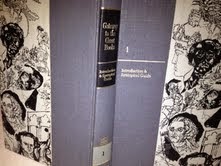
TO THE GREAT BOOKS AND BEYOND!
At long last, I've begun my great books education. I'm leaping from the airplane, skydiving into other worlds, suspended by the parachute of western culture! Whew! The air is exhilarating! Or maybe I am just not getting enough oxygen.
I've started Encyclopedia Brittanica's 54-volume "Great Books of the Western World" reading program. Herb bought me the set for my birthday. Yes, I have the best husband in the whole world. My set came with the optional 10-volume "Gateway to the Great Books". We haven't worked out how we will manage it, but Herb and I are going to read and discuss together. So far that has been in the car. It was lovely. We are reading Volume 1 of the Gateway now. We will be married 34 years next month. We have so much to look forward to.
Tuesday, July 16, 2013
Abandoning Our Superstitious Beliefs About Knowledge
I've been on a Wendell Berry thing. He promotes the agrarian lifestyle in the most eloquent way. I love to read his essays, but even more I love to listen to him talk! His voice seems to reflect the calm, thoughtful way in which he lives. Maybe working so close to the land gives him an inner peace that can then flow out through his vocal chords.
Last week I listened to a Wendell Berry interview from 1981, but it was just as fresh and insightful as if it were recorded this morning. He has a knack for helping you see something from a totally different perspective, usually things that are so endemic to our American culture that we have accepted them without ever considering any other possibility.
Anyway, in this interview, Berry makes the point that acquiring more information is not necessarily a good thing. That doesn't seem like such a big deal until you really think about how profoundly it affects the choices that Americans make, whether it's to get a college degree or do a Google search or finance a multi-billion dollar research project with taxpayer money. We assume that the more information we have, the better off we are. I have unconsciously subscribed to this philosophy and research subjects endlessly in order to make an "informed decision".
So I was rather shocked when he says that "the evidence is overwhelming that knowledge does not solve the human problem. It probably doesn't solve anything. Indeed the evidence suggests, with Genesis, that knowledge IS the problem." (audience laughs)
At that point, I re-grouped and realized what he meant. He was differentiating between knowledge and wisdom, that same wisdom that used to be one of the ends of education but has now been discarded in favor of knowing miscellaneous facts and being able to pass tests. Berry makes that clear right away when he says, "Or perhaps, we should say instead, that all our problems tend to gather under two questions about knowledge: One, having the ability and the desire to know, how and what should we learn? And the other, having learned, how and for what should we use what we know?"
If only we asked these questions! The questions presuppose, however, that the questioner shares the same moral code as his countrymen. That is definitely not the case in America, where atheism is given the same respect as Christianity. Well, actually, it is given more respect. Muslims probably get the most respect of all.
He continues, "One thing that we do know, that we dare not forget, is that better solutions than ours have at times been made by people with less information than we have." This statement I knew immediately to be true from my experience with trying to eat real food. My great-grandparents definitely knew more about how to nourish themselves than my generation. And they "learned" from their culture. It was passed down to them, not something they researched. For a thorough introduction to this topic, I recommend Nourishing Traditions, a cookbook/primer about traditional ways of eating.
The US government has promoted policies that have destroyed the kind of community that passed down knowledge and wisdom. Of course the most fundamental community is the family. We used to be a country full of independent family farms. And those family farms made up tightly-knit farming communities that also functioned as a means to share and pass down culture. So without a shared culture, we are dependent on the latest research, devoid of any connection to God, tradition, or any loving consideration of future generations. Without community, we pave the way for the likes of Monsanto. And Empty Nest Syndrome.
"We know too, from the study of agriculture," Berry says, "that the same information, tools, and techniques that in one farmer's hands will ruin land, in another's will save and improve it. This is not a recommendation of ignorance. To know nothing, after all, is no more possible than to know enough. I am only proposing that knowledge, like everything else, has its place, and we need urgently now to put it in its place. I will have something later to say about what I think its place is.
"If we want to know and cannot help knowing, then let us learn as fully and accurately as we decently can, but let us at the same time abandon our superstitious beliefs about knowledge--that it is ever sufficient, that it can of itself solve problems, that it is intrinsically good, that it can be used objectively or disinterestedly. Let us acknowledge that the objective or disinterested researcher is always on the side that pays best, and let us give up our forlorn pursuit of the informed decision. The informed decision is as fantastical a creature as a disinterested third party (audience laughs) and the objective observer."
One has only to recall the history of eugenics to know that Berry is absolutely right. This is why separation of church and state creates catastrophes on a worldwide scale. We must live an integrated life. There must be limits. Our choices in what to learn and how to use what we learn must be informed by the Faith.
Let us restore Christendom and quickly!
P.S. For me, one of the most interesting things about this talk is how Berry applies these ideas to agriculture and marriage simultaneously. In Part 2 of the interview, he compares purchasing a farm to getting married, and it is at once illuminating and humorous. Each part is only about ten minutes long, perfect for a coffee break!
Last week I listened to a Wendell Berry interview from 1981, but it was just as fresh and insightful as if it were recorded this morning. He has a knack for helping you see something from a totally different perspective, usually things that are so endemic to our American culture that we have accepted them without ever considering any other possibility.
Anyway, in this interview, Berry makes the point that acquiring more information is not necessarily a good thing. That doesn't seem like such a big deal until you really think about how profoundly it affects the choices that Americans make, whether it's to get a college degree or do a Google search or finance a multi-billion dollar research project with taxpayer money. We assume that the more information we have, the better off we are. I have unconsciously subscribed to this philosophy and research subjects endlessly in order to make an "informed decision".
So I was rather shocked when he says that "the evidence is overwhelming that knowledge does not solve the human problem. It probably doesn't solve anything. Indeed the evidence suggests, with Genesis, that knowledge IS the problem." (audience laughs)
At that point, I re-grouped and realized what he meant. He was differentiating between knowledge and wisdom, that same wisdom that used to be one of the ends of education but has now been discarded in favor of knowing miscellaneous facts and being able to pass tests. Berry makes that clear right away when he says, "Or perhaps, we should say instead, that all our problems tend to gather under two questions about knowledge: One, having the ability and the desire to know, how and what should we learn? And the other, having learned, how and for what should we use what we know?"
If only we asked these questions! The questions presuppose, however, that the questioner shares the same moral code as his countrymen. That is definitely not the case in America, where atheism is given the same respect as Christianity. Well, actually, it is given more respect. Muslims probably get the most respect of all.
He continues, "One thing that we do know, that we dare not forget, is that better solutions than ours have at times been made by people with less information than we have." This statement I knew immediately to be true from my experience with trying to eat real food. My great-grandparents definitely knew more about how to nourish themselves than my generation. And they "learned" from their culture. It was passed down to them, not something they researched. For a thorough introduction to this topic, I recommend Nourishing Traditions, a cookbook/primer about traditional ways of eating.
The US government has promoted policies that have destroyed the kind of community that passed down knowledge and wisdom. Of course the most fundamental community is the family. We used to be a country full of independent family farms. And those family farms made up tightly-knit farming communities that also functioned as a means to share and pass down culture. So without a shared culture, we are dependent on the latest research, devoid of any connection to God, tradition, or any loving consideration of future generations. Without community, we pave the way for the likes of Monsanto. And Empty Nest Syndrome.
"We know too, from the study of agriculture," Berry says, "that the same information, tools, and techniques that in one farmer's hands will ruin land, in another's will save and improve it. This is not a recommendation of ignorance. To know nothing, after all, is no more possible than to know enough. I am only proposing that knowledge, like everything else, has its place, and we need urgently now to put it in its place. I will have something later to say about what I think its place is.
"If we want to know and cannot help knowing, then let us learn as fully and accurately as we decently can, but let us at the same time abandon our superstitious beliefs about knowledge--that it is ever sufficient, that it can of itself solve problems, that it is intrinsically good, that it can be used objectively or disinterestedly. Let us acknowledge that the objective or disinterested researcher is always on the side that pays best, and let us give up our forlorn pursuit of the informed decision. The informed decision is as fantastical a creature as a disinterested third party (audience laughs) and the objective observer."
One has only to recall the history of eugenics to know that Berry is absolutely right. This is why separation of church and state creates catastrophes on a worldwide scale. We must live an integrated life. There must be limits. Our choices in what to learn and how to use what we learn must be informed by the Faith.
Let us restore Christendom and quickly!
P.S. For me, one of the most interesting things about this talk is how Berry applies these ideas to agriculture and marriage simultaneously. In Part 2 of the interview, he compares purchasing a farm to getting married, and it is at once illuminating and humorous. Each part is only about ten minutes long, perfect for a coffee break!
Wednesday, June 12, 2013
When Father's Day Was Every Day
I have long been interested in the ways that the Industrial Revolution affected family life and how our society might facilitate the return of the patriarchal family. To my way of thinking, if you really want to do this, you not only have to bring mothers home, you have to bring fathers home as well, because home loses its importance when its head spends the best part of his day elsewhere.
About six months ago I discovered an article titled "Industrialization and Marriage" by Robin Phillips.
Its main premise is that industrialization fundamentally changed marriage, and this paved the way for our modern de-functionalized homes and even the feminist movement.
Phillips writes that "prior to 1800, the vast majority of people lived and worked in the same place. Whatever else a couple's relationship may have involved, they were quite literally in business together. The home, in turn, was not a place where people 'lived' as a passive activity when they were not doing other things. Rather the home was a small factory, a bustling hub of productivity." This is how the wife felt part of something important, and she could truly fulfill her role as helpmeet. I know that I feel peaceful and am much more focused on what I need to do when my husband is home the whole day.
This idea of the husband and wife being in business together prior to the Industrial Revolution made me think of how we now have "bedroom communities", "media rooms". Keeping rooms were a mainstay of Colonial houses because inhabitants lived and worked in them. Keeping implies activity, as in keeping house.
Here's the part of the article that really stopped me and made me think: "The geographical proximity of home and work had an impact on how couples thought of their relationship to each other. A man and wife did not think of their relationship as something that could be abstracted from their mundane life together in the world." He explained that marital relations and earning a living "were closely bound together, and both were situated within an ecosystem of obligations, responsibilities, priorities and expectations that were bigger than the couple's relationship. Because marriage was understood to be bigger than the relationship itself, this helped to anchor marriage in a narrative external to the two participates (sic)."
Of course this "in business together" relationship extended to the children as well. I am listening to an audio book on rhetoric by Professor Michael Drout. He says that in Sanskrit, the word for daughter means "one who milks the cow". The professor says that it is believed that Sanskrit and Greek and Latin sprung from a common language, so you can see how deeply-embedded these home-supporting roles were in our culture before Capitalism came along.
I was stunned to learn about the role government played in promoting modern housing. Silly me, I thought people just got tired of farm life and wanted to move to the suburbs, but no, the "Industrialization and Marriage" article reveals that "the concept of the family room originated from guidelines that the government issued in the middle of the 20th century when specifying how homes could qualify for insurance. A new model of the home emerged which deliberately detached it from labor and functionality. Government planners urged architects and home-owners to get rid of walls and doors, to eliminate various work rooms like the sewing room and the pantry and to focus the house instead around the type of domestic bonding that was supposed to occur in rooms like the family room."
Gee, this sounds like what happened to architecture in the Catholic Church after Vatican II. The functionality of divine worship that was expressed by things like altar rails was destroyed in order to promote "community".
In the case of housing, this change was necessary to convert independent producers into dependent consumers of industrial goods. It has taken a long time to accomplish, but we are there. State governments implemented compulsory schooling to speed this along. I imagine that once dad was gone from home, taking the children was a lot easier, especially as classical education was swept aside and replaced with the memorize-and-regurgitate-textbooks method.
Clearly we have been duped into destroying God's plan for the family. If only we could see it.
About six months ago I discovered an article titled "Industrialization and Marriage" by Robin Phillips.
Its main premise is that industrialization fundamentally changed marriage, and this paved the way for our modern de-functionalized homes and even the feminist movement.
Phillips writes that "prior to 1800, the vast majority of people lived and worked in the same place. Whatever else a couple's relationship may have involved, they were quite literally in business together. The home, in turn, was not a place where people 'lived' as a passive activity when they were not doing other things. Rather the home was a small factory, a bustling hub of productivity." This is how the wife felt part of something important, and she could truly fulfill her role as helpmeet. I know that I feel peaceful and am much more focused on what I need to do when my husband is home the whole day.
This idea of the husband and wife being in business together prior to the Industrial Revolution made me think of how we now have "bedroom communities", "media rooms". Keeping rooms were a mainstay of Colonial houses because inhabitants lived and worked in them. Keeping implies activity, as in keeping house.
Here's the part of the article that really stopped me and made me think: "The geographical proximity of home and work had an impact on how couples thought of their relationship to each other. A man and wife did not think of their relationship as something that could be abstracted from their mundane life together in the world." He explained that marital relations and earning a living "were closely bound together, and both were situated within an ecosystem of obligations, responsibilities, priorities and expectations that were bigger than the couple's relationship. Because marriage was understood to be bigger than the relationship itself, this helped to anchor marriage in a narrative external to the two participates (sic)."
Of course this "in business together" relationship extended to the children as well. I am listening to an audio book on rhetoric by Professor Michael Drout. He says that in Sanskrit, the word for daughter means "one who milks the cow". The professor says that it is believed that Sanskrit and Greek and Latin sprung from a common language, so you can see how deeply-embedded these home-supporting roles were in our culture before Capitalism came along.
I was stunned to learn about the role government played in promoting modern housing. Silly me, I thought people just got tired of farm life and wanted to move to the suburbs, but no, the "Industrialization and Marriage" article reveals that "the concept of the family room originated from guidelines that the government issued in the middle of the 20th century when specifying how homes could qualify for insurance. A new model of the home emerged which deliberately detached it from labor and functionality. Government planners urged architects and home-owners to get rid of walls and doors, to eliminate various work rooms like the sewing room and the pantry and to focus the house instead around the type of domestic bonding that was supposed to occur in rooms like the family room."
Gee, this sounds like what happened to architecture in the Catholic Church after Vatican II. The functionality of divine worship that was expressed by things like altar rails was destroyed in order to promote "community".
In the case of housing, this change was necessary to convert independent producers into dependent consumers of industrial goods. It has taken a long time to accomplish, but we are there. State governments implemented compulsory schooling to speed this along. I imagine that once dad was gone from home, taking the children was a lot easier, especially as classical education was swept aside and replaced with the memorize-and-regurgitate-textbooks method.
Clearly we have been duped into destroying God's plan for the family. If only we could see it.
Wednesday, August 29, 2012
Wednesday, August 15, 2012
Boys Will Be Boys, But Why?

I spent the most enjoyable and educational interlude the other day listening to a talk by writing expert Andrew Pudewa on the differences between boys and girls. It's called, "Teaching Boys and Other Kids Who Would Rather be Playing in Forts".
After raising a boy and a girl and homeschooling them from kindergarten through high school, you would think that I would already know these things, but I didn't. Well, I knew how the differences were expressed. I knew the problems they caused. What I didn't know were the underlying reasons for them. Now I know that they are physically different in the way they see, hear, and the way their bodies react to stress.
Pudewa bases his 2009 talk on the work of Dr. Leonard Sax, M.D., Ph. D., the author of Why Gender Matters, (2005) Boys Adrift, (2007) and Girls on the Edge, (2010). I am ordering the two most recent ones and will publish reviews here on my blog. Some of the information in the talk has been updated with new research. Go HERE for Dr. Sax's explanation.
The talk was so good I listened to it two times. The second time I played it on my iPhone for my husband and daughter to hear as we blazed down I-10 on Saturday to attend an engagement party. I enjoyed it just as much the second time. And it was FREE. You just can't beat that with a stick. Unless you're a boy. They can beat just about anything with a stick. That I learned when my boy was about 18 months old. He gleefully made music one day by whacking the ivory off the edges of most of our piano's keys.
Go to Circe Institute's Free Audio Library and scroll to the bottom for the "Teaching Boys" talk. Don't delay. Apparently these talks are rotated regularly.
Tuesday, August 7, 2012
Will You Circumcise?
 |
| For in Christ Jesus neither circumcision availeth any thing, nor uncircumcision: but faith that worketh by charity. Galatians 5:6 |
I am learning a lot from Emma's research into how she wants to parent. One of the subjects she studied and discussed with me was circumcision. Although I was already against it for the simple fact that God must have designed boys' bodies the way he did for a good reason, her research turned up a whole slew of medical reasons not to circumcise. An important distinction must be made at the outset, though. What passes for circumcision these days is a drastic surgery and can even be deadly. It is not what God prescribed for the Jews of the Old Testament.
I think this is an important subject for women to study. Even if you are already against it, you will be able to defend your decision in a well-informed manner and share the information with other women in your sphere of influence. Future grandmas, you too can be a source of information. For Catholics, "Catholics Against Circumcision" is a good start. Particularly troubling for me was their page titled, "Human Foreskins Sold for Human Embryonic Stem Cell Research, Cloning, and the Creation of Chimeras (Animal/Human Hybrids)". This page from drmomma.org, "Are You Fully Informed?" provides an array of links and book titles for further study.
Monday, August 6, 2012
Homework: Helping to Make Round Pegs Fit in Square Holes
"Homework may be the single greatest extinguisher of children's curiosity that we have yet invented."
This quote comes from the video below. I agree wholeheartedly with its message.
When my eldest was approaching kindergarten age, we lived in a subdivision with a school within walking distance. It was actually right in our neighborhood. Sidewalks from our front yard led straight to it, and every day I watched streams of my neighbors' children flow there and back. They were so cute! I loved watching them every day. However, talking with their parents about the day-to-day expectations of the school convinced me that I didn't want my children to go.
One of my main concerns was the homework. They had loads of it. They even had science projects in kindergarten! This sounds impressive to a lot of people, but I soon realized that the parents were the ones who were bringing the science projects to fruition, not the children. The pressure to get the homework and the projects done in the limited amount of free family time caused a lot of tension between the parents and the children.
I saw that the school was reaching into the home and robbing the parents of their right to direct the children's after-school time. And even this was not enough. Nationally, movements to keep the children in school year-round re-surfaced on a regular basis, on the false assumption that if the system used to educate children wasn't working well, the solution was to add more hours to that system. At least that was the reason given. I think the real reason is that the government wants to be the primary influence in our children's lives, so the less time at home, the better. It wants all the children to think the same, to be predictable, and submissive. Having free time gives children the opportunity to become individuals, to discover what their interests are and develop them, even if those interests are not going to channel them into college, which has been set up as the path that must be followed to "SUCCESS". Of course success is narrowly defined as something that will allow you to get a "good" job at a place that provides "good" benefits. This is usually not going to be self-employment. It is going to be a corporation. The corporations with the best benefits are usually the multi-national ones. This means that they have a cozy relationship with the government. They will provide all the social "training", otherwise known as indoctrination, that the government regulations require, through programs on sexual harassment, affirmative action, etc.
And it all starts with a little worksheet.
Wednesday, August 1, 2012
Something He Can Work On

"Mom?" Nathaniel called to me the other day. "Do you have something called distilled white vinegar?"
"Yeeeees," I replied. "How much do you need? I have 3 1/2 gallons."
He took the half gallon and disappeared out the back door. Shortly, he was back with a wide grin. "Come see," he said.
I followed him out to his Mustang, and he showed me two different sections on the hood of his car. One had water spots, and the other one didn't. He was using the vinegar to take the spots out and was really pleased with the way it was working. He said that he found the vinegar tip on the internet.

The car has been one of the best learning experiences he has had. Something always needs his attention, and he has been forced to figure it out. His dad has worked with him on this, trying his best to guide him without taking over and doing it himself, which is really hard for him. Not only has Nathaniel gained great mechanical knowledge, he has learned a lot about himself and how people approach problems differently. For instance, when his clutch went out, his dad saw the first step as going under the car and looking at the transmission to see what would need to be done to get it out. Nathaniel wanted to look it up on the internet. This led to another "people skills" learning experience, as neither could see at first where the other one was coming from. To add to the stress, it was Christmas and freezing cold. They eventually got it worked out and the huge job of changing out the clutch on that car successfully accomplished.
Once all the pain was over, Nathaniel just swelled with confidence. The experience was worth every moment of pain and suffering. It was a rite of passage.
Thursday, May 24, 2012
Embracing Fertility

"Whew!" I thought. "Now that's one way to get consumers to open your catalog!"
Of course, "Making Babies" is not about sex. From what I could discern from quickly reading the sales blurb and watching the YouTube commercial, it teaches women how to eat and take care of themselves in a way that is optimal for having a baby with lifelong health. This is the hard core approach, the traditional foods method, eating densely nutritious food like grassfed beef liver, fermented cod liver oil and pastured butter. It is definitely not What to Expect When You're Expecting. I'm sure it probably covers what the man needs to do as well. Eating for fertility seems to be the latest hot topic in the health world. I've seen several health gurus marketing such products. Another one that comes to mind is Chris Kresser's "Healthy Baby Code". I think it's great but also a little sad. Clearly, our culture no longer knows how to "make babies" and needs remedial coursework. For a long time we have denigrated the role of the nurturing mother. We protect by law those who kill babies in the womb. So these new educational products make an important statement. A small segment of our culture is beginning to value procreation. This is not to say that they are embracing having large families, but I believe that once a husband and wife make the commitment and the sacrifice necessary to have a truly healthy baby, their whole value system will be righted. They will be awed by God's plan, whether they believe in it or not. They will be so blessed by this new life, they will want to do it all over again. Maybe they will even come to the conclusion that Emma did when she gazed rapturously at the photo of the baby on the catalog:
"Making babies is my favorite thing!"
Monday, April 23, 2012
Educating Ourselves About Personality Disorders
Catholics spend a lot of time thinking about their faults and trying to improve. We study the four temperaments to understand the weaknesses of our personality types, and we read about the saints for inspiration. Then we run into personality problems with other Catholics, and we are disillusioned. We think, "How can this be? How can I be hurt most often by my brothers and sisters in the faith?" Maybe it is because we interact with them more and/or we have higher expectations because they are Catholic. I don't know. The disillusionment can be taken to a whole new level if that Catholic is a priest, because we hold them to the highest standards of all, even though we know that they are "only human" and pray regularly for holy priests. As hard as that is, it's even worse when it is a "good Catholic" family member who is hurting us. Light's House is a great support site for anyone who suspects that their familial relationships are not normal.
Sometimes a person does something that makes us feel uncomfortable, but we are not sure why. It is helpful to have a vocabulary to help us express and clarify the discomfort. This list of Top 100 Traits of Personality-Disordered Individuals can do just that. It may help us recognize our own unhealthy behaviors and give us the impetus to change them.
Familiarizing ourselves with the Top 100 Traits can also help us recognize when the situation we are dealing with calls for different techniques to deal with it than what we have been using. After all, we cannot change other people, only our reaction to them. Sometimes the only solution is to go "low contact" or "no contact" with the individual, even if it is a family member.
Sometimes a person does something that makes us feel uncomfortable, but we are not sure why. It is helpful to have a vocabulary to help us express and clarify the discomfort. This list of Top 100 Traits of Personality-Disordered Individuals can do just that. It may help us recognize our own unhealthy behaviors and give us the impetus to change them.
Familiarizing ourselves with the Top 100 Traits can also help us recognize when the situation we are dealing with calls for different techniques to deal with it than what we have been using. After all, we cannot change other people, only our reaction to them. Sometimes the only solution is to go "low contact" or "no contact" with the individual, even if it is a family member.
Subscribe to:
Posts (Atom)